Commercial Waste Removal in Bethnal Green
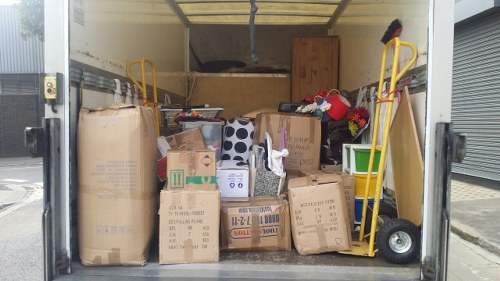
Commercial waste removal in Bethnal Green needs to be practical, well organised and suited to the pace of offices, shops, hospitality venues and managed premises. We provide a straightforward service for clearing business rubbish, with a focus on removing mixed commercial waste, sorting reusable and recyclable material where appropriate, and keeping the collection process manageable for the customer. The service is designed to support businesses that need a reliable way to deal with day-to-day waste, one-off clearances or recurring accumulation.
Our work can cover general commercial rubbish as well as heavier or awkward items that are no longer needed on site. Depending on the material, that may include furniture, fixtures, packaging, office contents, stockroom clutter and other non-hazardous business waste. We aim to keep the process clear from the first enquiry through to collection, so you know what is being removed, what cannot be taken and how the visit will be handled. If you need commercial waste removal in Bethnal Green, the simplest next step is to ask for a quotation.
Because business premises vary so much, we keep the service flexible. A small office clear-out, a retail refurbishment tidy-up and a multi-item disposal job all need different handling, access and timing. We therefore focus on practical planning rather than a one-size-fits-all approach. If you already know the type of waste you have, you can describe it clearly; if not, a short summary of the items and the amount involved is usually enough to begin. Request a quotation when you are ready.
Business waste types we can clear
Commercial waste usually includes a wide mix of items rather than a single category, so the removal method needs to match the contents. Our service can deal with general business rubbish alongside furniture and other bulky pieces that are taking up room in offices or customer-facing areas. In many cases the main challenge is not the weight alone, but the variety of materials that have built up over time and need to be separated in a sensible way.
Common examples include desks, chairs, shelving, filing items, packaging, display materials, broken equipment, and general non-hazardous rubbish from storage or back-of-house spaces. Where material can be separated for reuse or recycling, we work with that in mind. Business waste removal is the core service for this kind of work, while related collection pages can help if your clearance is more specific.
For customers who need help with specialised streams, it helps to match the item type to the right disposal route. That might mean general clearance for mixed waste, or a more focused visit where particular bulky items are being taken away. The aim is always the same: remove what is no longer useful, keep the job orderly and leave the space ready for its next use. Please get in touch if you would like to compare options.
Furniture and office contents from commercial premises
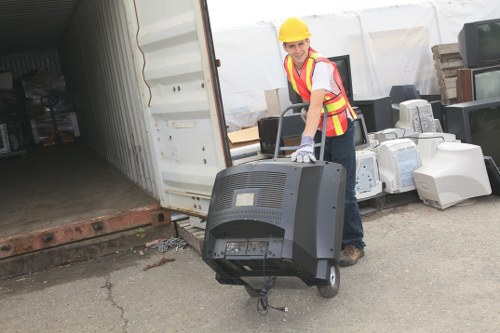
Many business clearances involve furniture rather than loose rubbish. Desks, task chairs, meeting tables, storage units and reception items can all become surplus when a lease changes, a team is reduced or a room is reconfigured. Where this is the case, the removal visit is planned around access routes, lifting needs and any items that must be separated before collection. Office clearance is useful when the job centres on workspaces and equipment inside a business premises.
We also handle related furniture disposal work where a site needs only selected items removing rather than a complete room emptied. This is useful for premises that want to retain most of their equipment but clear redundant pieces in stages. In practical terms, that can include a few chairs, a damaged cabinet or a full set of older furnishings being replaced in one go. If your items are mixed with other commercial rubbish, we can discuss the most efficient way to handle the load.
For some customers, the real value is not simply lifting the items but making sure the clearance fits the schedule of the premises. A shop, office or shared building may need collections arranged to minimise disruption, and the best plan will depend on what must be removed, how it is stored and whether anything needs to be dismantled first. If you are unsure whether a furniture-led job should be classed as an office clearance or a broader waste removal, a brief description of the items will help.
Clearances for stockrooms, garages and storage areas
Commercial premises often use back rooms and storage areas for the items that do not fit in front-of-house space. Over time, these rooms can fill with packaging, spare fittings, damaged stock, seasonal material and equipment that is no longer needed. Our clearance service can help restore usable space by removing the waste in a structured way, whether the area is a stockroom, garage, basement or storage bay associated with business activity.
Where the problem is concentrated in one part of the premises, a targeted clearance may be the most sensible approach. Garage clearance is relevant for storage-heavy spaces, while loft clearance may be useful for upper-level or attic-like areas used by some businesses for archive or overflow storage. These pages are not about domestic work only; they can also reflect the kind of access and item mix that commercial customers sometimes face.
We try to keep the process efficient without overselling what is involved. If a room contains awkwardly stacked items or a mix of reusable and disposable material, the site visit needs enough detail to plan the removal properly. The most useful starting point is a clear description of the room, the main items and whether anything is blocked in or hard to reach. That allows the quotation to reflect the real scope of the work rather than a rough guess.
Refurbishment, refurbishment waste and building-related clearances
Business premises often generate waste when they are being updated, reconfigured or repaired. Old fixtures, broken panels, packaging, offcuts and unwanted fittings can build up quickly once a project is underway. Our commercial waste removal service can support these clearances by taking away the non-hazardous material that no longer has a place on site. The goal is to keep the environment safer and less cluttered while the work moves forward.
Builders waste clearance is a useful option where waste comes from alteration work, fit-out activity or general improvement tasks. Not every business job falls neatly into that category, but the page is helpful when your clearance includes mixed debris rather than ordinary office or retail rubbish. For larger jobs, the important point is to identify what sort of material is present, because some items need different handling from standard commercial furniture or packaging.
For best results, it helps to separate what is being discarded from what must remain on site. That can include keeping stock, tools, documents or fixtures away from the load while the waste itself is grouped together. A short written description is often enough to begin; if the project includes several material types, mention the main ones rather than trying to list every small item. We will then work out the most practical way to approach the collection.
Specialist disposal for selected item types

Some business clearances involve particular item types that need more careful handling than general rubbish. A broken fridge in a café, an unwanted sofa in a waiting area or a set of mattresses from accommodation use all fall into this more specific category. The collection needs to reflect the shape, weight and disposal route of the items, rather than treating everything as a single mixed load. That is why item-led pages can be helpful when planning a quotation.
Fridge and appliance removal covers larger white goods and similar appliances, while mattress and sofa disposal is useful where upholstered or bulky soft furnishings are the main concern. These pages sit alongside our broader waste removal work, so customers can choose the description that most closely matches the load. Where the item is part of a larger commercial clearance, the categories can be combined in a single practical plan.
We do not assume that every bulky item is straightforward, and we do not ask you to guess the final category if you are unsure. A simple summary of what needs removing is usually enough. If the collection includes more than one type of waste, tell us which items are the priority and which are secondary. That makes it easier to provide a quotation that reflects the real workload and avoids unnecessary duplication of visits or handling.
Office waste, paperwork and sensitive material
Office clearances often combine ordinary waste with items that need extra care because of privacy, storage needs or the layout of the workspace. The removal of desks, chairs and cupboards may be only part of the job; there may also be archived paperwork, mixed office clutter or material that should not be left exposed while the clearance is taking place. In these situations, an organised sequence matters more than speed alone.
Confidential shredding is relevant when paper records or sensitive documents need secure disposal rather than ordinary recycling. It is best to choose this route when the material includes client files, staff records or other paperwork that should not simply be placed with general office waste. Where the office also needs a fuller clear-out, the shredding and removal elements can be planned together so the job is handled in one coherent visit.
Commercial customers often find it useful to decide in advance which items remain in use, which will be retained for archives and which are ready for disposal. That keeps the collection focused and reduces the chance of removing something that still belongs on site. If you are preparing a quotation request, it is usually enough to note the room type, the main contents and whether sensitive papers are included. From there, we can discuss the most suitable way to proceed.
Recycling, sorting and responsible handling
Commercial waste removal is not only about taking items away; it also involves deciding what can be separated, what should be treated as general rubbish and what requires specialist disposal. Mixed business waste can contain cardboard, plastics, metal, wood and reusable materials in the same load, so sorting is a practical part of the process. We aim to handle this in a way that is orderly and consistent with the type of waste being collected.
Recycling and sustainability explains the approach used when material can be directed away from disposal where appropriate. That does not mean everything will be recycled, and it does not change the need for proper classification, but it does reflect the value of separating different waste streams at the point of collection. For customers, this is often the difference between an untidy all-in-one clearance and a more considered service.
It is also worth remembering that not every item belongs in the same group. Food waste, building debris, office equipment and furniture may each need a different disposal route, and putting them together can make the job less efficient. If you are not sure how your material should be described, we can help you identify the main categories from the information you provide. The quotation can then be based on a realistic view of the waste rather than an oversimplified label.
How to prepare a quotation request
To quote accurately, we need a clear picture of the waste type, the approximate amount and any access issues that may affect removal. A short summary is often enough, especially for smaller business collections. If the load includes multiple item types, it helps to note which ones are dominant and whether anything is bulky, fragile or positioned in a difficult area. This is practical information rather than paperwork, and it keeps the estimate focused on the actual work.
Two details are particularly useful: whether the items are already gathered together, and whether any dismantling or lifting support will be needed on site. If the waste is spread across several rooms, or if it has to come down stairs or through narrow access, say so in the enquiry. You do not need to prepare a long inventory unless the job is large. A concise description is enough to begin the conversation, and you can add detail if the collection becomes more involved.
For a direct next step, use pricing and quotes to start planning the job and to compare the information needed for your request. If you already know the main items, include them in your message and ask for a quotation. If you are still deciding which service page fits best, a brief explanation of the premises and the waste will usually point you in the right direction.
About Bethnal Green
Bethnal Green is a district in East London within the London Borough of Tower Hamlets, and it has long been associated with the wider story of the East End. The area grew from a rural hamlet into a densely populated urban district during the nineteenth century, shaped by housing, industry and migration. Its street pattern still reflects layers of change, from older routes and terraces to later redevelopment and civic buildings. The neighbourhood sits close to Whitechapel, Shoreditch and Stepney, yet it has a character of its own, with a mix of residential streets, markets, local shops and public institutions. Bethnal Green Underground station opened in 1946, though the route itself had been planned much earlier as part of the Central line expansion, and the station became known for its wartime shelter history. The Museum of the Home, formerly the Geffrye Museum, is one of the area’s best-known cultural institutions and focuses on the history of domestic life in Britain. Victoria Park lies nearby to the east, while Regent’s Canal runs within reach of the district and connects the area to a wider network of east London waterways. The neighbourhood also has a strong association with traditional pubs, community venues and local religious buildings, many of which sit alongside more recent developments. Together these details give Bethnal Green a layered urban identity: historically working class, closely tied to east London’s changing economy, and still marked by a dense mix of everyday uses, historic reference points and active public life.
Waste removal for different business settings

Commercial waste removal is rarely identical from one premises to the next. An office, a small shop, a café, a workshop and a managed building all produce different mixtures of waste, and each setting creates its own access and timing questions. That is why the service is designed around the actual site rather than a generic checklist. The more accurately the premises and the waste are described, the more sensible the collection plan becomes.
Some customers need a one-off removal after a reorganisation, while others need a repeat-clearance approach because stock, fittings or packaging build up over time. In either case, the same basic principles apply: identify the items, keep the load manageable and choose the right disposal route. Waste removal is the broad page for general bookings, while business waste removal remains the clearest description when the work is clearly commercial in nature.
If you are comparing pages, think first about what sort of waste dominates the job. That may point you towards an item-specific page, a room-specific clearance or the general waste removal service. There is no need to force a description into a more complex category than it needs to be. A clear, plain-language summary is often the best way to request a quotation and avoid confusion later in the process.
Choosing the right clearance route
Furniture clearance is often the right fit when the bulk of the job is made up of office or commercial furniture rather than loose rubbish. It helps separate those jobs from broader clearances where packaging, debris and mixed waste are the main issue. If you are uncertain which route fits, the useful question is simple: are you mostly removing furniture, mostly removing rubbish, or removing a mixed load that includes both?
Where the premises contain household-style contents as well as business items, the scope may overlap with home clearance or house clearance, but commercial customers should use the service description that best matches the setting and the actual contents. Likewise, if a mixed-site job includes a flat above a shop or similar layout, flat clearance may be relevant for the residential portion. These distinctions matter because they help keep the quotation accurate and the collection properly scoped.
The best choice is the one that reflects the contents honestly. You do not need to present the job as larger or more specialised than it is. If it is mainly office furniture, say so. If it is general business rubbish with a few bulky items, say that instead. Ask for a quotation once you have the main details to hand, and we can help shape the next step.
Start with a clear quotation request
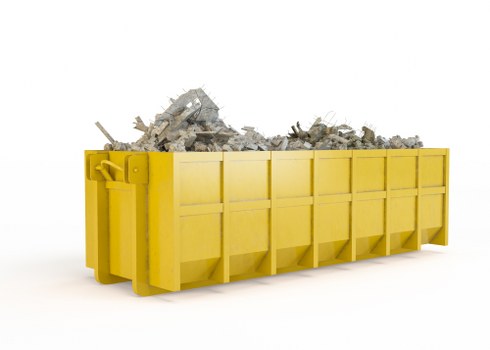
When a business needs commercial waste removal in Bethnal Green, the most helpful starting point is a straightforward description of the waste and the premises. That could be a few surplus office items, a storage-area clear-out, furniture disposal or mixed business rubbish from an ongoing change. The service is built to handle practical removal work in a way that keeps the process understandable from the first message onward.
If you already know the main items, send them through with any access notes and ask for a quotation. If the job is more complex, mention the room type, the approximate volume and any special handling concerns. We can then guide you towards the most suitable option, whether that is a general collection, a room-specific clearance or one of the more focused service pages already listed above. Request a quotation today.
For customers who want to compare the main pages before they enquire, the key idea is simple: choose the description that best matches the waste, then provide a clear summary of what needs removing. That keeps the request concise and helps the collection be planned sensibly. When you are ready, send the details and we will take it from there.