Health and Safety Policy — Commercial Waste Removal Bethnal Green
 This Health and Safety policy sets out the standards and measures adopted by our commercial waste removal team to protect employees, contractors, clients and the public. It applies to all commercial waste removal Bethnal Green operations, including site-based rubbish collection and depot activities across our service zone. The policy aligns with good practice for a rubbish company service area while remaining a clear operational statement rather than a legal interpretation.
Our aims are clear: to prevent work-related injury and ill health, to reduce environmental harm during commercial rubbish removal, and to maintain safe systems of work for every waste collection, transfer and disposal task. The document covers roles and responsibilities, risk assessment, training, personal protective equipment and monitoring.
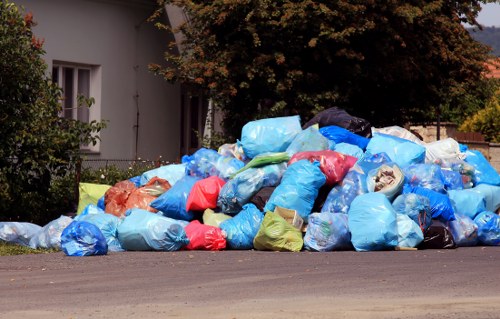 Scope and applicability: This policy covers all waste removal services we provide, including scheduled refuse collection for businesses, ad hoc commercial clearance, and specialist waste handling. It also applies to subcontractors working on behalf of the company within the rubbish collection Bethnal Green area and any other identified service area where the company operates.
Responsibility and management: The company director and senior management retain ultimate responsibility for health and safety, while supervisors and team leads are tasked with day-to-day implementation. Every employee has a duty to follow safe working procedures and to report hazards without delay. Strong managerial oversight and clear lines of responsibility are fundamental to safe waste management.
 Risk assessment and safe systems of work: We conduct dynamic and formal risk assessments for all activities, from bulky waste removal to hazardous material segregation. Control measures are proportionate and include documented method statements, vehicle loading plans and traffic-management procedures for front-of-premises rubbish collection. The assessments consider manual handling, chemical exposure, sharps and sharps bins, traffic interaction, and slips, trips and falls.
Training and competence: Employees receive role-specific training, induction, and periodic refresher sessions. Training includes manual handling, correct use of lifting aids, safe operation of compactors and tipper mechanisms, and safe driving for waste collection vehicles. Competence is assessed and recorded to ensure that every operative in the commercial waste management Bethnal Green service area meets the required standards.
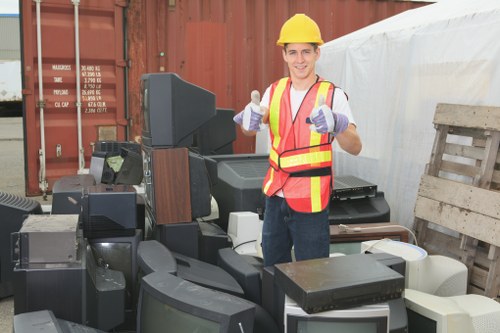 Personal protection and workplace controls: The company provides appropriate PPE, including high-visibility clothing, gloves suitable for handling mixed commercial rubbish, safety boots, eye protection and respiratory protection where risk assessments indicate. PPE selection follows a hierarchy of controls and is used in conjunction with engineering and administrative controls.
Vehicle and equipment safety: All vehicles and plant used for commercial waste removal are subject to scheduled maintenance and pre-shift checks. Drivers and operators must complete vehicle inspection checklists and report defects immediately. Loading and unloading procedures are documented to prevent overloading, uncontrolled movement of loads and the risk of falling objects during transfer and compaction activities.
Hazardous and controlled waste: Certain materials require specialist handling and disposal. The policy mandates segregation at source where practical, secure containment, and the use of approved carriers and disposal routes for controlled waste. Staff handling hazardous items receive additional instruction on spill response, decontamination and the safe use of spill kits.
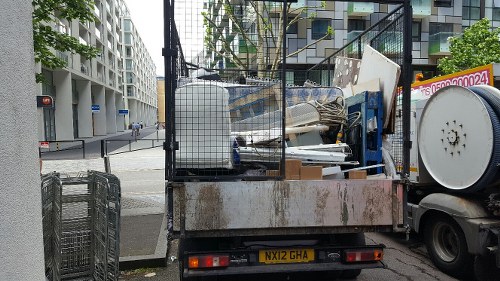 Manual handling and ergonomics: Manual handling remains a significant risk in commercial refuse removal. The company implements mechanical aids, safe lifting techniques and job rotation to reduce strain. Supervisors must ensure that lifting tasks are risk assessed and that operators seek assistance or use trolleys and hoists where appropriate.
Incident reporting and investigation: All accidents, near-misses and dangerous occurrences are reported, investigated and recorded. Investigations identify root causes and lead to corrective actions and lessons learned. We maintain records of incidents, training, machine inspections and risk assessments to support continuous improvement across the rubbish removal services.
Monitoring, review and continuous improvement
We audit compliance through scheduled inspections, toolbox talks and performance reviews. Health and safety performance indicators include incident rates, training completion, equipment defects and audit outcomes. The policy is reviewed at least annually or after significant changes in activity, legislation or following a serious incident to ensure it remains effective for commercial waste operations in our service area.Employee engagement and communication
We encourage open communication on safety matters. Employees are consulted on changes that affect their health and safety and are invited to raise concerns through established reporting channels. Regular briefings and toolbox talks reinforce safe practices for the rubbish collection and commercial clearance teams.Contractors and subcontractors: Contractors working on behalf of the company must demonstrate suitable health and safety arrangements and co-operate with site-specific rules. The company retains the right to suspend contractors who do not comply with safe working requirements until satisfactory controls are implemented.
Conclusion: This policy reflects the company’s commitment to protect people and the environment while delivering reliable commercial waste removal services. Adherence to these principles helps ensure that rubbish company service area operations are conducted safely, responsibly and with due regard for the communities we serve.
